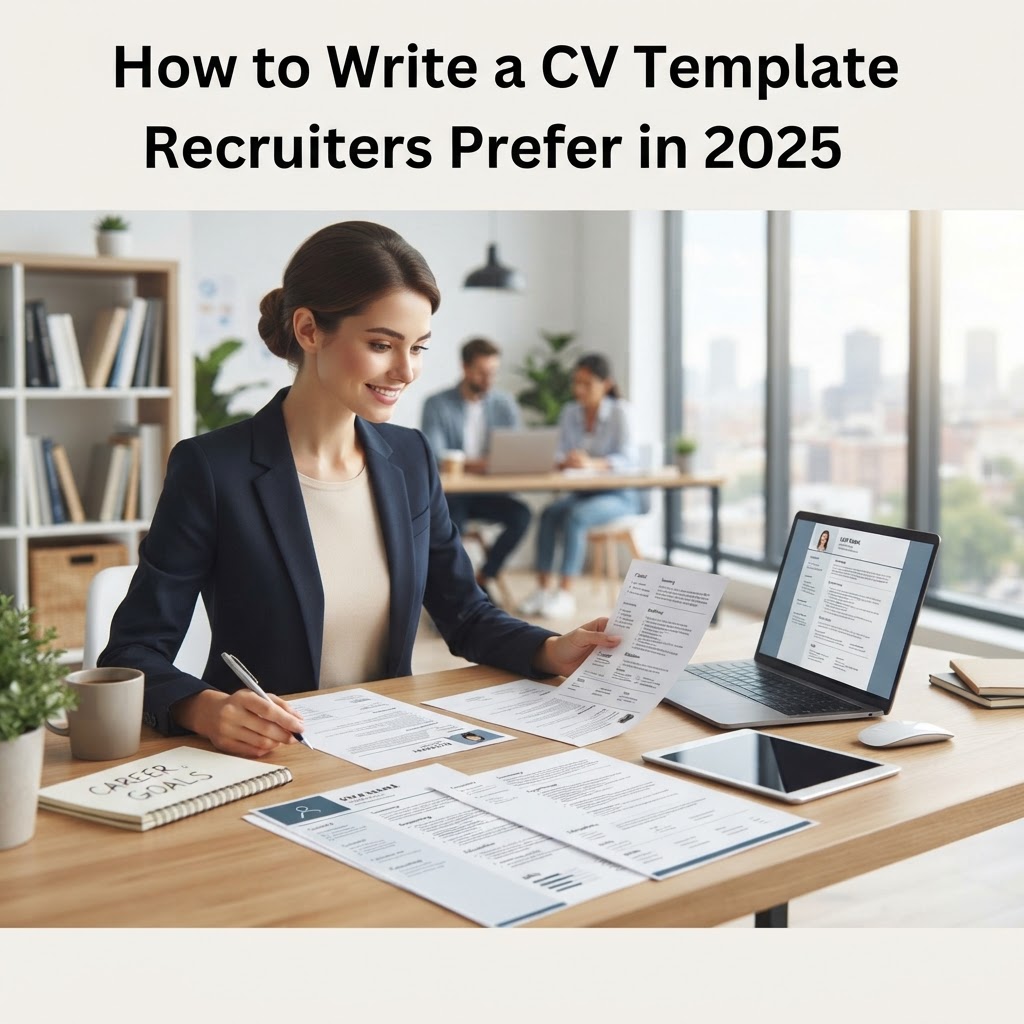
How to Write a CV for Faster Shortlists in Europe
If you are wondering how to write a CV that gets noticed in the EU and UK, focus on relevance, clarity and evidence. The right CV template, a practical ATS friendly resume layout, and a solid grasp of the best CV format 2025 can make the difference between being skimmed and being shortlisted.
What employers expect from the best CV format 2025
Across most of Europe and the UK, the safest choice is a clear reverse-chronological CV. Recruiters want to see your most recent and most relevant experience first, with job titles, dates and achievements easy to scan.
For most candidates, the best CV format 2025 looks like this:
- Length: one page for students or early-career applicants; up to two pages for most professionals
- Layout: clean headings, generous spacing, consistent date formatting
- Font: simple and readable, such as Arial, Calibri or Helvetica
- File type: PDF unless the employer specifically asks for Word
- Section order: contact details, profile, experience, education, skills, languages, optional extras
Your contact section should usually include:
- Full name
- Phone number
- Professional email address
- City and country
- LinkedIn profile
- Portfolio or GitHub link, if relevant
In the UK, avoid adding a photo, date of birth, marital status or other unnecessary personal details. In some EU markets, expectations can vary, but unless an employer asks for more information, keep your CV focused on professional fit. If you want a deeper comparison of layouts, this guide to the best CV format for 2025 in EU and UK roles is a useful next step.
Choose the right CV template or Europass CV template
A good CV template should help recruiters find the important information quickly. It should not distract with graphics, columns that break on mobile, or design elements that confuse applicant tracking systems.
For many private-sector roles, a simple modern template is the strongest option. It is usually more flexible than a Europass CV template and easier to tailor to a specific vacancy.
A Europass CV template can still be useful when:
- applying for EU institutions, mobility programmes or public-sector roles
- applying for academic or research positions where a standardised format is acceptable
- an employer explicitly asks for Europass
- you need a multilingual profile that is easy to share across borders
A standard CV template is usually better when:
- applying to private companies in the UK or wider EU
- you want stronger personal branding without being overly decorative
- you need to prioritise achievements over a rigid form
- ATS compatibility matters for large employers and job boards
If you are unsure which layout suits your background, these practical CV template choices for Europe can help you match format to role and market.
How to write a CV section by section for an ATS friendly resume
When learning how to write a CV, it helps to build each section with a clear purpose. A strong ATS friendly resume is not just keyword-stuffed; it is structured so both software and human readers can understand your value quickly.
1. Write a focused profile
Your opening profile should be 3 to 4 lines. Summarise your experience level, specialism and the value you bring.
Example:
Operations coordinator with 4 years' experience across logistics and customer support in the EU market. Skilled in process improvement, cross-border stakeholder communication and Excel reporting. Fluent in English and Spanish, with immediate work authorisation in Ireland and the wider EU.
Keep it specific. Generic phrases like "hard-working team player" add little.
2. Turn work experience into evidence
For each role, include:
- Job title
- Employer
- Location
- Dates
- 3 to 5 bullet points focused on outcomes
Strong bullet points usually start with an action verb and show scope, ownership or results.
Instead of:
- Responsible for customer service
Use:
- Managed customer queries across UK and EU accounts, improving response consistency during peak periods
- Coordinated onboarding documentation for new suppliers across three markets
Where you can, add scale or context, but only if it is accurate. You do not need exaggerated numbers to sound credible.
3. Keep education relevant
List qualifications in reverse order. For recent graduates, education can sit above experience. Include modules or dissertation topics only when they support the role.
4. Add skills that match the vacancy
Your skills section should reflect the language used in the job advert. This is one of the simplest ways to improve ATS matching.
Useful subcategories include:
- Technical tools
- Industry skills
- Languages
- Certifications
For language ability in Europe, CEFR levels such as B2 or C1 can be helpful, especially for cross-border roles.
5. Include optional details only if they help
You may add:
- Notice period
- Work authorisation status
- Remote or hybrid availability across the EU or UK
- Professional memberships
- Relevant projects or volunteer work
If you want more detail on keywords, headings and formatting rules, read this guide on how to write a CV for ATS and human review in Europe.
Tailor your CV for EU and UK applications
One of the most overlooked CV writing tips is this: do not send the same document to every employer. Even a strong CV performs better when tailored.
Start by checking the job advert for:
- exact job title
- core skills and tools
- location and remote expectations
- language requirements
- notice period or availability requests
- right-to-work requirements
Then adjust your CV in three places:
- Profile: mirror the role focus
- Skills section: use the employer's language where accurate
- Experience bullets: move the most relevant evidence higher
This matters especially in Europe, where application norms vary. A UK employer may expect a concise, achievement-led CV with no photo. An EU-funded programme may accept or prefer Europass. A remote role across the EU may prioritise time-zone overlap, language skills and cross-border collaboration.
Be privacy-aware too. On GDPR-conscious job boards and application platforms, share only the personal data needed to assess your candidacy. Full street addresses, personal identity numbers and irrelevant background details usually do not belong on a CV.
Tailoring also supports a smarter application strategy overall. If you are applying too broadly, this guide on how to find a job in Europe without wasting applications can help you focus your effort.
CV writing tips before you press send
Strong final checks often separate a good CV from a shortlist-worthy one. Use these practical CV writing tips before every application:
- Proofread carefully: spelling and date errors still cost interviews
- Keep formatting consistent: headings, bullet style and spacing should match throughout
- Use a clear filename:
Firstname-Surname-CV.pdfis better thanfinalversion3.pdf - Customise the headline and profile: especially for each job family
- Remove weak filler: phrases like "references available on request" are unnecessary
- Check links: LinkedIn, portfolio and email should all work
- Save the right version: PDF is usually safest unless the employer requests editable format
Also remember that your CV is only one part of your application. If you are invited to interview, your examples on the page should be consistent with the stories you tell in conversation.
Key takeaways
- Use a simple reverse-chronological structure for most EU and UK roles.
- Choose a CV template that is readable and ATS-safe before you choose one that looks stylish.
- Use a Europass CV template only when it fits the employer or application type.
- Build an ATS friendly resume with clear headings, relevant keywords and evidence-based bullet points.
- Tailor each CV to the role, market and work-authorisation context.
- Keep personal data minimal and professionally relevant for European applications.